Introduction
A non stick pie pan is a common tool in many kitchens. You use it for baking pies, quiches, tarts, and other dishes. But before you start mixing your filling or rolling out your dough, you need to know one thing: what size is your non stick pie pan?
Using the wrong size pan can affect your recipe. A pan that is too small may cause the filling to overflow. A pan that is too large may leave you with a thin, dry pie. Measuring your pie pan helps you choose the right recipe or adjust the ingredient amounts.
This article covers 5 simple steps to measure a pie pan. You will learn how to measure the diameter, depth, and volume. You will also find tips for handling unusual shapes and understanding manufacturer labels.
Why Measuring a Pie Pan Matters
Before we get into the steps, let’s talk about why measurement is important for a pie pan.
Recipe Accuracy
Most pie recipes are written for a specific pan size. A 9-inch pie recipe assumes you have a 9-inch pie pan. If you use an 8-inch pan, the crust will be thicker and the filling may overflow. If you use a 10-inch pan, the crust will be thinner and the pie may bake faster.
Even Baking
A pie pan that matches the recipe helps the pie bake evenly. The heat distributes properly through the filling and crust. When the pan size is off, the center may remain undercooked while the edges burn.
Ingredient Adjustments
If you know the exact size of your pie pan, you can adjust the recipe. For example, a 10-inch pan needs about 25% more filling than a 9-inch pan. Knowing the volume of your non stick pie pan allows you to scale recipes up or down.
Consistency
When you use the same non stick pie pan repeatedly, your pies will turn out more consistent. You will know exactly how much dough and filling to prepare.
What You Will Need
Before you start measuring your non stick pie pan, gather a few simple tools.
| Tool | Purpose |
|---|---|
| Ruler or tape measure | Measuring diameter and depth |
| Kitchen scale (optional) | Measuring volume by weight |
| Water | Measuring volume by liquid |
| Measuring cup | Pouring water into the pan |
| Pen and paper | Recording measurements |
Make sure your non stick pie pan is clean and dry before you measure it.
Step 1: Measure the Diameter
The diameter is the distance across the widest part of the non stick pie pan. This is the most common measurement used in pie recipes.
How to Measure Diameter
Place the non stick pie pan upside down on a flat surface. This gives you access to the bottom.
Locate the top edge of the pan. The diameter is measured from the inside edge to the opposite inside edge, not including the rim.
Place your ruler or tape measure across the center of the non stick pie pan.
Read the measurement at the inside edge on both sides.
If your non stick pie pan has sloped sides, measure at the top edge where the filling sits. Do not include the outer rim or handle.
Common Diameters
Most non stick pie pans come in standard sizes:
6 inches – small tarts or personal pies
7 inches – medium tarts
8 inches – small pies
9 inches – standard size for most recipes
10 inches – large pies
12 inches – extra large or deep-dish pies
If your non stick pie pan measures between two standard sizes, round to the nearest half inch for recipe purposes.
What to Do with the Measurement
Once you know the diameter of your non stick pie pan, you can compare it to your recipe. If the recipe calls for a 9-inch pan and your pan is 8 inches, you may need to reduce the filling or use a smaller amount of dough.
Step 2: Measure the Depth
The depth tells you how tall the sides of the non stick pie pan are. This measurement matters for deep-dish pies, quiches, or any recipe with a lot of filling.
How to Measure Depth
Place the non stick pie pan right side up on a flat surface.
Insert your ruler straight down into the center of the pan.
Measure from the bottom of the non stick pie pan to the top edge.
Do not include the outer rim or any decorative edge.
Standard Depths
Pie pans come in different depths:
Regular depth – about 1 to 1.25 inches
Deep dish – about 1.5 to 2 inches
Most standard pie recipes assume a regular-depth non stick pie pan. If your pan is deeper, you may need more filling and a longer baking time.
Why Depth Matters
A deep non stick pie pan holds more filling. If you use a regular-depth recipe in a deep pan, the pie will be thinner. If you use a deep-dish recipe in a regular pan, the filling may overflow.
Knowing the depth of your non stick pie pan helps you choose the right recipe and adjust baking time.
Step 3: Measure the Volume
Volume tells you how much filling your pie pan can hold. This is useful when you want to adapt a recipe from a different pan size.
Method 1: Measuring with Water
This is the most straightforward way to measure the volume of a non stick pie pan.
Place the pan on a level surface.
Fill the pan with water to the brim. Do not overfill.
Use a measuring cup to scoop the water out.
Count how many cups of water the non stick pie pan holds.
Note the total volume.
For example, a standard 9-inch carbon steel pie pan usually holds about 4 to 5 cups of water. A deep-dish 9-inch pan may hold 6 to 7 cups.
Method 2: Measuring with a Scale
If you have a kitchen scale, you can measure the volume by weight.
Place the non stick pie pan on the scale and zero it out.
Fill the pan with water to the brim.
Read the weight in grams or ounces.
One milliliter of water weighs one gram. One fluid ounce weighs about 29.6 grams.
If your pan holds 1200 grams of water, it has a volume of about 1200 milliliters, or roughly 5 cups.
Why Volume Matters
Volume is the most accurate way to compare different non stick pie pans. Two pans can both be 9 inches in diameter but have different depths and different volumes. Knowing the volume of your non stick pie pan allows you to scale any recipe to fit.
Step 4: Measure Unusual Shapes
Not all non stick pie pans are round. Some are square, rectangular, or have scalloped edges. Measuring these requires a slightly different approach.
Square or Rectangular Pans
For a square or rectangular pie pan, measure the length and width inside the pan. Multiply these two numbers to get the surface area. Then measure the depth and multiply to get the approximate volume.
For example, an 8×8 inch square pie pan with 1.5-inch depth has a volume of about 96 cubic inches. A standard 9-inch round pan has a volume of about 64 cubic inches, so the square pan holds more filling.
Fluted or Scalloped Pans
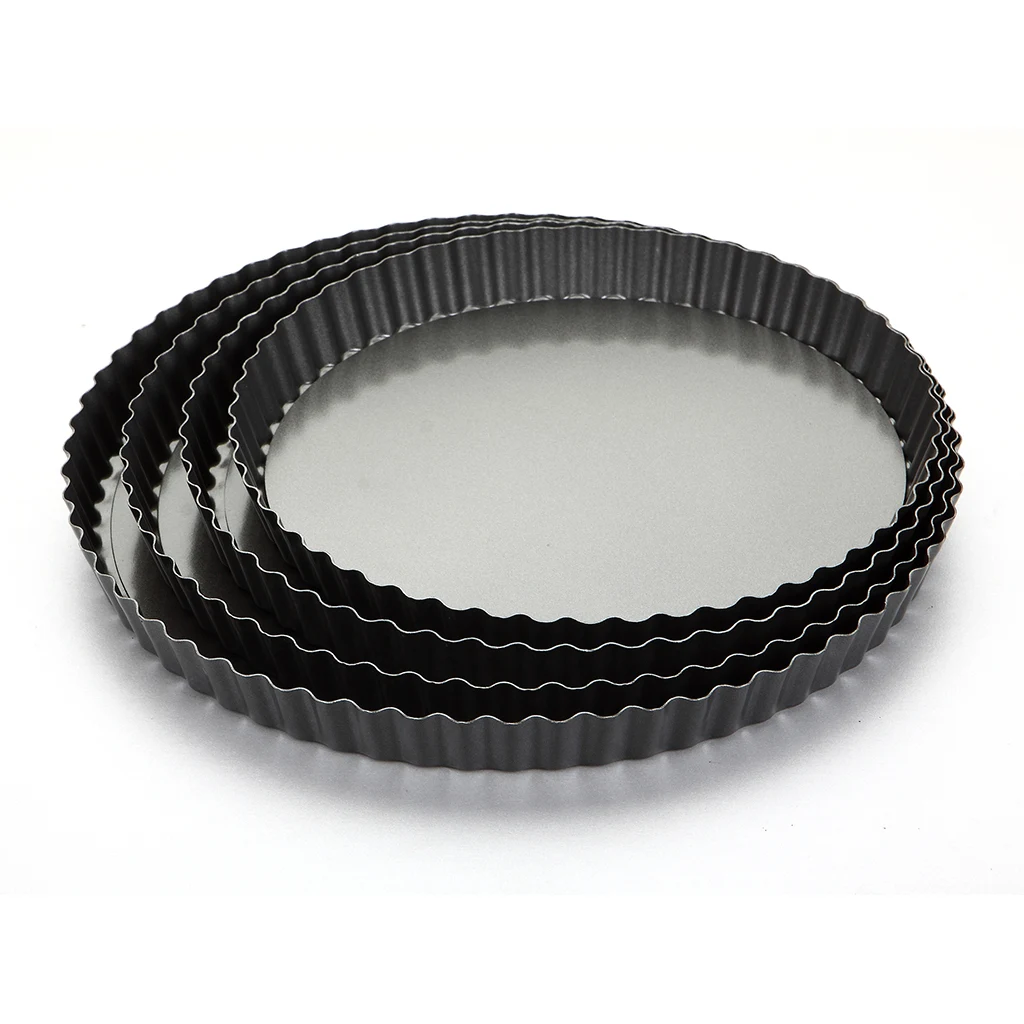
Some non stick pie pans have decorative edges. The flutes or scallops are part of the pan’s design. When measuring the diameter, measure from the inside edge to the opposite inside edge, ignoring the decorative rim.
When measuring volume, fill the non stick pie pan with water as usual. The flutes do not change the volume significantly.
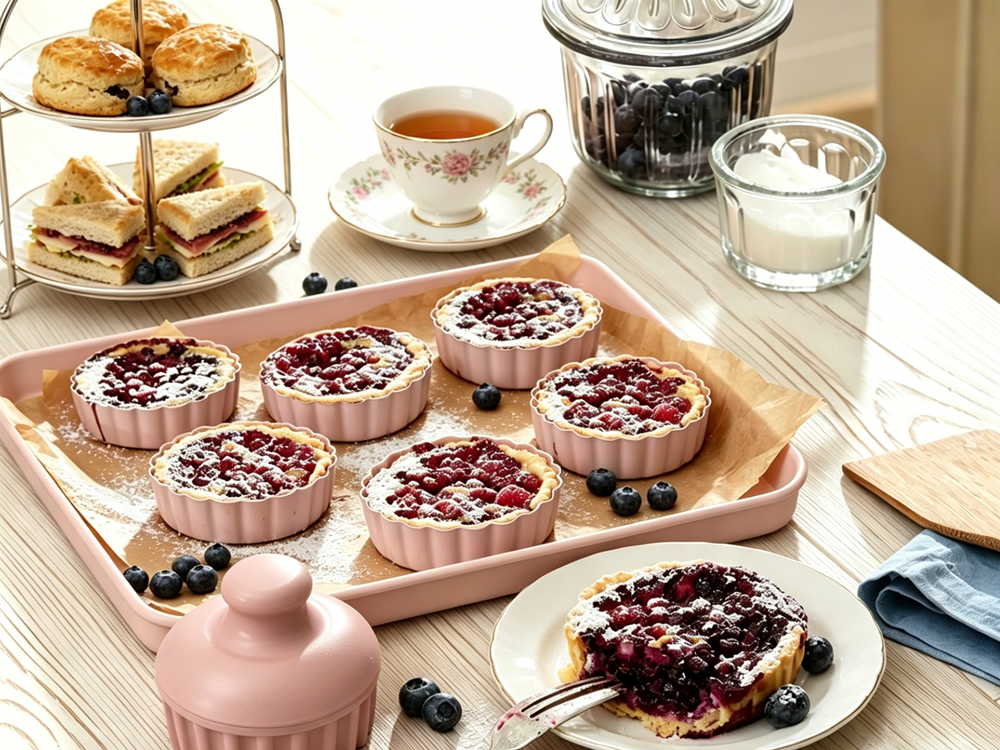
Mini or Tartlet Pans
Small non stick pie pans for individual tarts or pies are measured the same way. Measure the diameter and depth. For volume, fill one cavity with water and measure.
Step 5: Understand Manufacturer Labels
Most non stick pie pans come with a label or stamp that indicates the size. But these labels are not always accurate.
What the Label Tells You
The label on a non stick pie pan usually shows the diameter measured across the top edge, including the rim. This is different from the inside measurement.
For example, a non stick pie pan labeled as 9 inches may actually measure 8.5 inches from inside edge to inside edge. This difference can affect your recipe.
How to Verify
Always measure your non stick pie pan yourself. Do not rely only on the label. Use the steps above to find the true diameter, depth, and volume of your non stick pie pan.
Why Manufacturers Differ
Different brands measure their non stick pie pans differently. Some measure the inside diameter. Some measure the outside diameter, including the rim. Some include the handle in the measurement.
By measuring your non stick pie pan yourself, you get consistent, reliable numbers that work with any recipe.
Tips for Measuring a Non Stick Pie Pan
Here are a few additional suggestions to help you get accurate measurements.
Use a Metal Ruler
A flexible tape measure can bend and give you incorrect readings. A metal ruler or a stiff measuring tape is more accurate for measuring a non stick pie pan.
Measure on a Flat Surface
Place the non stick pie pan on a counter or table when measuring. Holding it in the air can cause the ruler to shift.
Add Your Heading Text Here
Measure your non stick pie pan two or three times to make sure the numbers are consistent. If you get different readings, measure again.
Write Down the Numbers
Keep a note of your pie pan measurements. Stick a piece of tape on the bottom of the pan and write the diameter, depth, and volume. This saves you time later.
Measure Before Each Use (If Unsure)
If you have multiple pie pans that look similar, measure them before baking. A 9-inch and a 10-inch pan can look almost the same but hold very different amounts of filling.
Common Questions About Measuring a Non Stick Pie Pan
Can I use the same measurements for a glass or ceramic pie pan?
The measuring method is the same for any pie pan, not just a non stick pie pan. However, glass and ceramic pans may have different baking properties. The size measurement still applies.
What if my pie pan is not a standard size?
If your pan is not a standard size, calculate the volume using the water method. Then compare that volume to standard pan sizes. For example, if your pan holds 5.5 cups of water, it is close to a standard 9-inch pan.
How do I adjust a recipe for a different pan size?
Use the volume measurement. If your pie pan holds 20% more water than the pan in the recipe, increase the filling ingredients by about 20%. For the crust, you may need to roll the dough slightly larger.
Do I need to measure the pan if I always use the same recipe?
If you always use the same pie pan and the same recipe, you do not need to measure it every time. But measuring it once gives you useful information for adapting other recipes.
Can I measure the pan after it has been used?
Yes. Wash and dry your pan before measuring. Food residue can affect the accuracy of your measurements.
Troubleshooting Common Measurement Issues
Even with good technique, you may run into a few problems when measuring a pie pan.
The ruler does not fit across the pan
If your pan is larger than your ruler, measure from the edge to the center, then double that number. For example, if the distance from the edge to the center is 4.5 inches, the diameter is 9 inches.
The pan has sloped sides
Most non stick pie pans have slightly sloped sides. Always measure at the top inside edge, not halfway down the slope.
The pan has a non-stick coating that makes it slippery
The non stick coating on a pie pan can make the ruler slide. Hold the ruler firmly in place with one hand while you read the measurement.
The pan is warped
If your pan is warped, the measurements may vary. Measure in a few different spots and use the average. A warped pan may not bake evenly, so you may want to replace it.
How to Care for Your Non Stick Pie Pan
Taking care of your pie pan helps it last longer and maintain its shape.
Hand Wash Only
Most non stick pie pans are not dishwasher safe. The high heat and harsh detergents can damage the non-stick coating. Wash your non stick pie pan with warm, soapy water and a soft sponge.
Avoid Metal Utensils
Metal knives or spatulas can scratch the non stick coating on your non stick pie pan. Use silicone, nylon, or wooden tools instead.
Stack Carefully
If you stack multiple non stick pie pans, place a paper towel or soft cloth between them. This prevents scratches on the coating.
Store in a Dry Place
Moisture can affect the carbon steel base of some pie pans. Dry the pan thoroughly before storing it.
Final Thoughts
Measuring a pie pan is a simple process that takes only a few minutes. Knowing the diameter, depth, and volume of your pie pan helps you choose the right recipes and adjust ingredient amounts.
The 5 steps covered in this guide are:
Measure the diameter
Measure the depth
Measure the volume
Measure unusual shapes
Understand manufacturer labels
With these measurements, you can use any pie recipe with confidence. Whether you are baking a classic apple pie, a quiche, or a tart, your pie pan will give you consistent results.