
🥧 Introduction: The Hidden Engineering Behind Every Bakeware
Have you ever wondered why some baking pans warp after a few uses, while others remain perfectly flat for decades? The answer lies not in the coating — but in the metal-forming process that created them.
Most home bakers never think about how their bakeware is made. But for manufacturers, procurement professionals, and serious baking enthusiasts, understanding the differences between stamping, deep drawing, and forging is the key to making smarter product decisions.
Let’s break down how each process works at the microscopic level — and what that means for rigidity, longevity, and cost.
🔧 What Is Stamping? Speed and Precision at Room Temperature
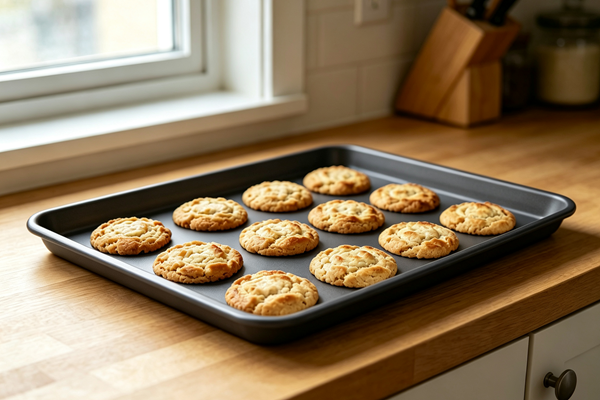
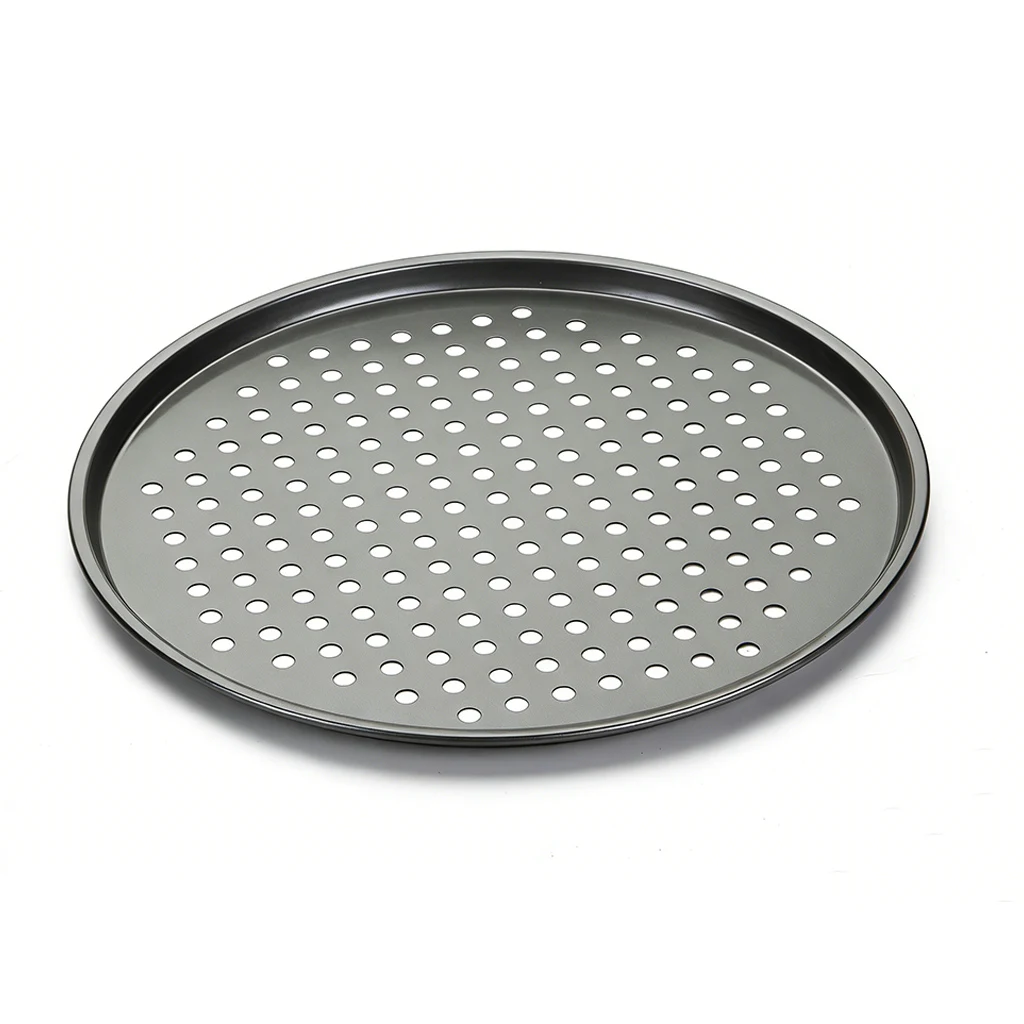
Stamping is the most common method for mass-producing bakeware. A flat sheet of metal is fed into a press, where dies cut, bend, and shape it into the desired form — all at room temperature.
Common materials include aluminum, low-carbon steel, and stainless steel, with sheet thickness typically ranging from 0.5 mm to 6 mm.
🧬 Microstructure: Cold-Worked and Strain-Hardened
During stamping, the metal undergoes cold working. This process strain-hardens the material — increasing its strength and hardness but reducing ductility. The grain structure becomes elongated and compressed in the direction of deformation.
Think of it like bending a paperclip back and forth: the metal gets harder, but also more brittle.
📦 How It Affects Bakeware Performance
| Factor | Impact |
|---|---|
| Rigidity | Moderate — reinforced edges can compensate |
| Heat distribution | Even, but thin walls may create hot spots |
| Warp resistance | Lower — thin-gauge stampings are prone to warping under high heat |
| Lifespan | Moderate — coating failure often ends the pan’s life |
💰 Cost Structure
Tooling costs are high upfront (precision dies), but per-unit costs drop dramatically at scale. This makes stamping the most economical choice for mass production — think millions of baking sheets rolling off production lines daily.
✅ Best for: High-volume, cost-sensitive product lines where consistent geometry and light weight are priorities.
🥣 What Is Deep Drawing? Shaping Depth Without Seams
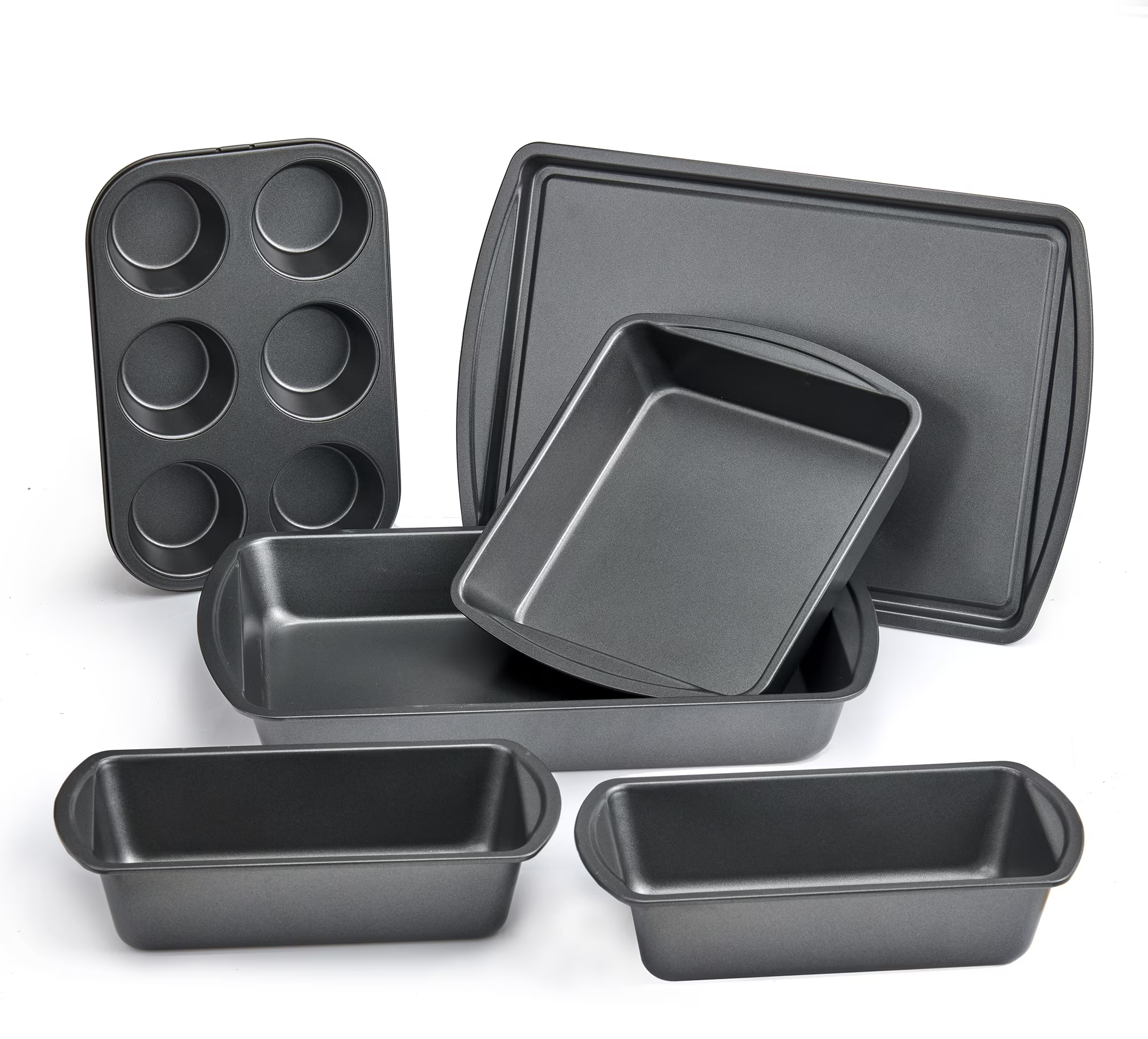
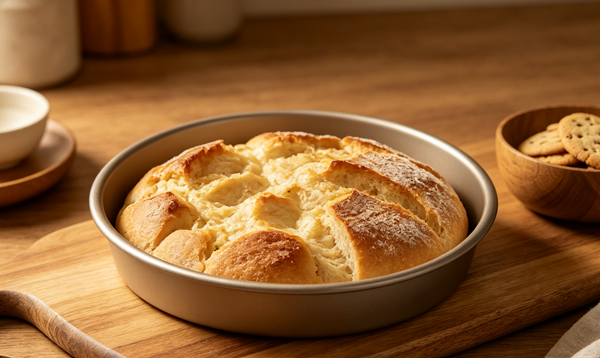
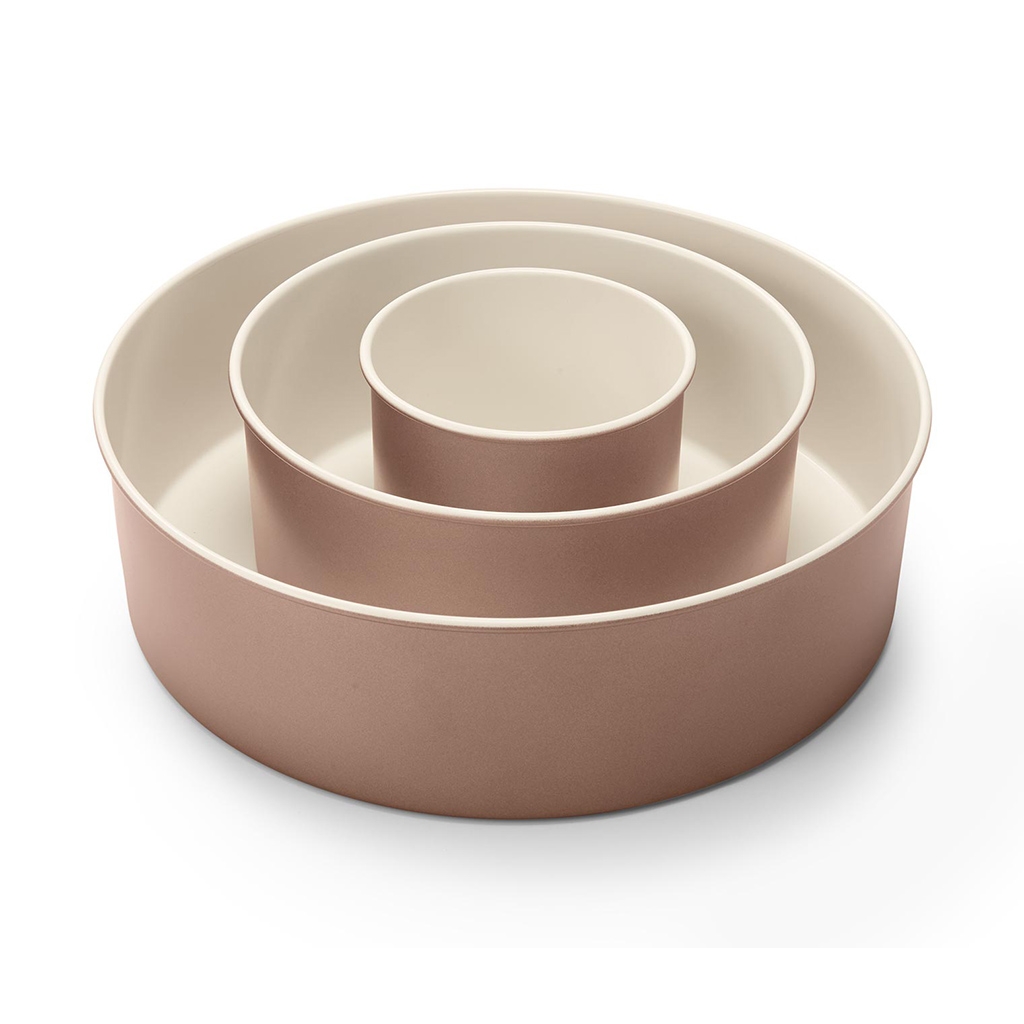
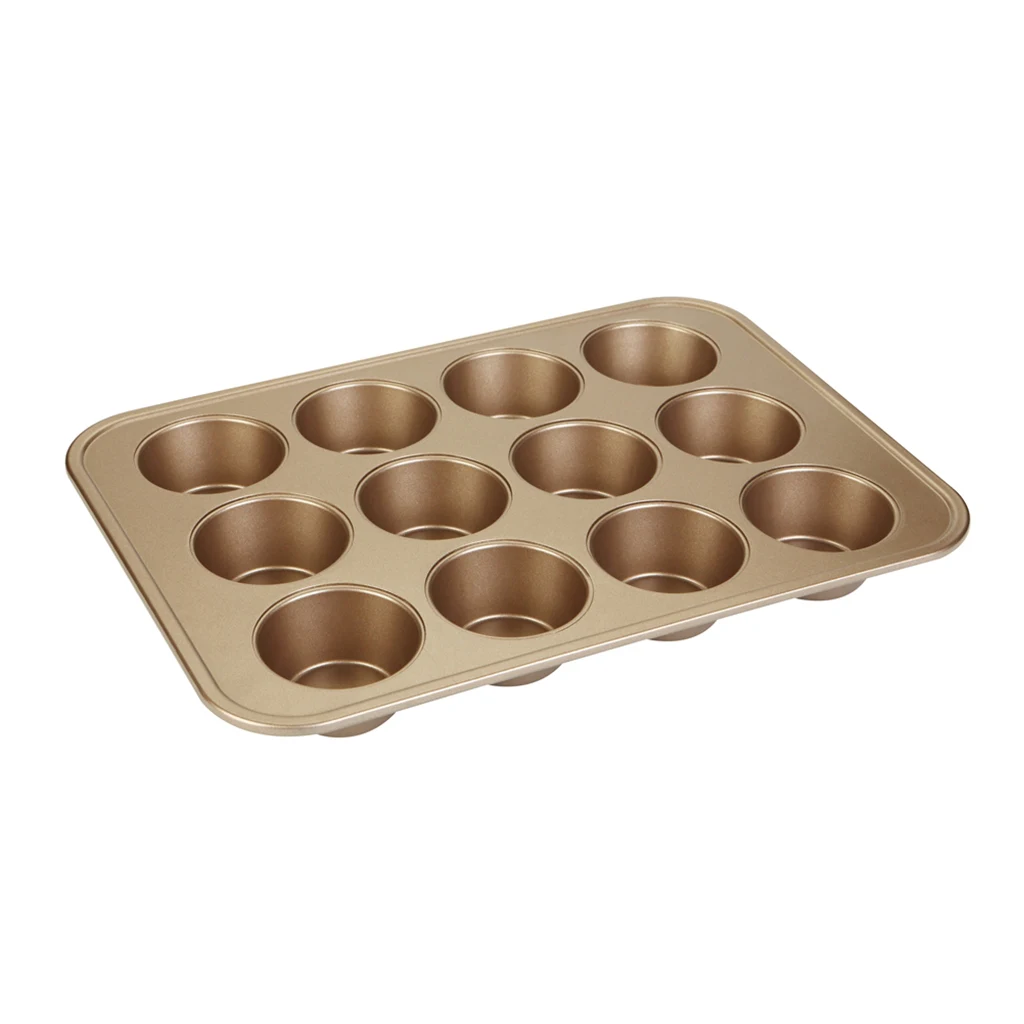
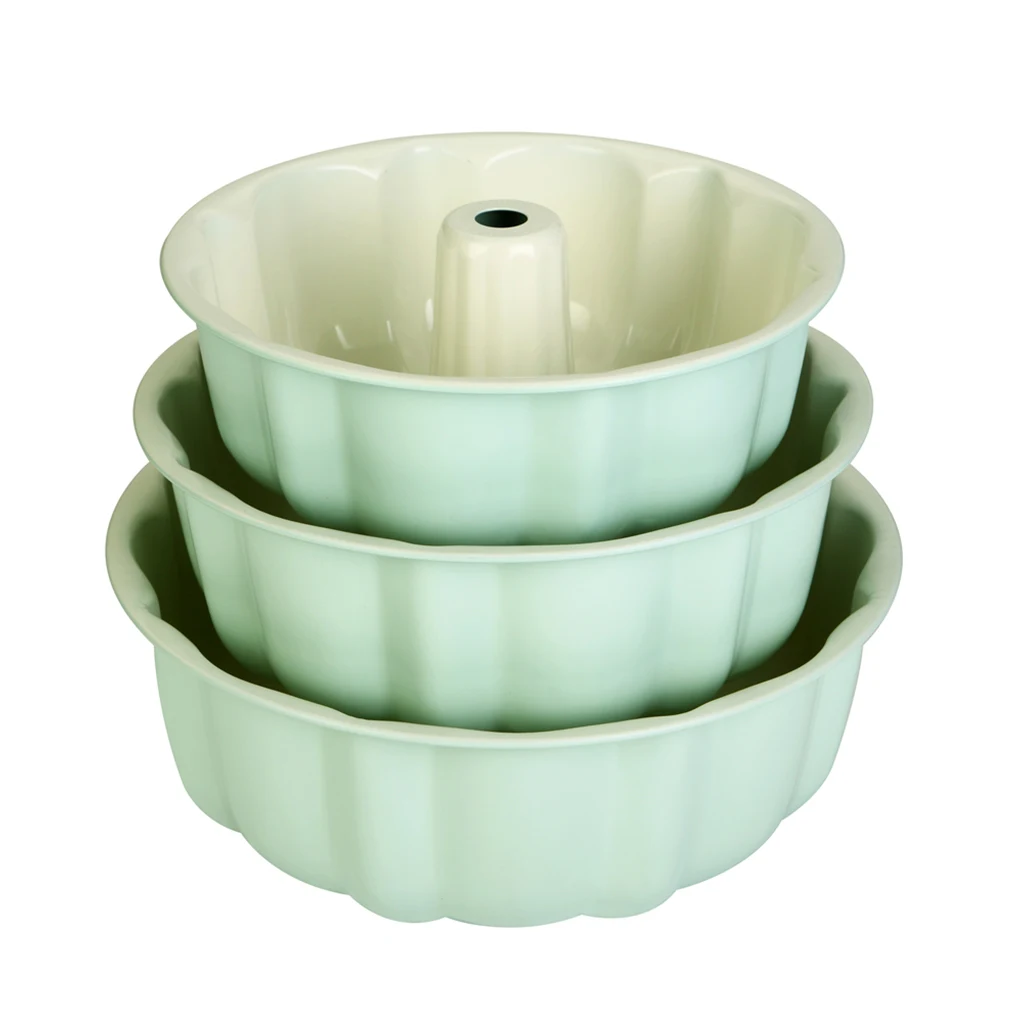
Deep drawing is a specialized form of stamping where a flat metal sheet is pulled into a die cavity to form deep, hollow shapes — like cake pans, muffin tins, and deep-dish pizza pans.
Unlike shallow stamping, deep drawing involves multi-stage forming, often requiring intermediate annealing to prevent cracking. The process gradually shapes the metal while maintaining material integrity.
🧬 Microstructure: Stretched and Thinned
The most critical microstructural feature of deep drawing is thickness variation. During the process, the center (pan base) retains near-original thickness, while the side walls become thinner as the metal stretches.
This uneven thickness isn’t just a manufacturing curiosity — it directly impacts performance.
📦 How It Affects Bakeware Performance
| Factor | Impact |
|---|---|
| Rigidity | Good — one-piece construction eliminates seams |
| Heat distribution | Can be uneven due to thickness variation at corners |
| Warp resistance | Better than basic stamping |
| Lifespan | Good — seamless design reduces failure points |
💰 Cost Structure
Deep-drawing dies are more expensive than standard stamping dies due to required surface finish and contour accuracy. A deep-drawing die might cost USD 5,000–8,000 compared to USD 2,000–3,000 for a standard stamping die.
Production is slower due to multi-stage forming and annealing requirements.
✅ Best for: Deep-cavity bakeware (cake pans, loaf pans, muffin tins) where seamless construction and moderate durability are required.
🔥 What Is Forging? Strength Through Heat and Pressure
Forging is fundamentally different. Instead of starting with a flat sheet, forging begins with a solid metal billet or ingot — often heated above 900°C for hot forging. The heated metal is then compressed between dies using immense force, causing it to flow into the desired shape.
🧬 Microstructure: The “Grain Flow” Advantage
This is where forging truly shines.
The forging process refines the grain structure of the metal, aligning the grains to follow the contour of the part — creating what metallurgists call “grain flow”.
Unlike stamping (which cuts through grain lines) or casting (which has no directional grain structure), forging deliberately orients grains in the direction of maximum strength.
This grain flow:
-
Eliminates internal voids and porosity
-
Breaks up inclusions that could cause failure
-
Creates continuous grain structure with superior strength and toughness
The result? A pan that’s structurally superior to anything produced by stamping or deep drawing.
📦 How It Affects Bakeware Performance
| Factor | Impact |
|---|---|
| Rigidity | Excellent — dense, refined grain structure |
| Heat distribution | Superior — uniform density means even heating |
| Warp resistance | Outstanding — forged aluminum is twice as hard as stainless steel and highly warp-resistant |
| Lifespan | Exceptional — can last for decades with proper care |
Forged aluminum bakeware is also less prone to dents and scratches compared to stamped alternatives.
💰 Cost Structure
Forging involves higher initial costs for dies and energy, with slower production rates. It’s typically reserved for lower-volume or high-performance applications.
However, the superior durability often makes forged bakeware a cost-effective long-term investment — especially in commercial kitchens where equipment replacement is a significant expense.
✅ Best for: Premium product lines, commercial-grade bakeware, and applications where longevity and warp resistance are non-negotiable.
📊 Quick Comparison: Stamping vs. Deep Drawing vs. Forging
| Caractéristique | Stamping | Deep Drawing | Forging |
|---|---|---|---|
| Starting material | Flat sheet | Flat sheet | Solid billet/ingot |
| Temperature | Room temperature | Room temperature (with annealing) | >900°C (hot forging) |
| Grain structure | Cold-worked, strain-hardened | Stretched, thinned at walls | Refined, aligned grain flow |
| Rigidity | Moderate | Good | Excellent |
| Warp resistance | Lower | Better | Outstanding |
| Lifespan | Moderate | Good | Exceptional |
| Tooling cost | High | Higher | Highest |
| Per-unit cost | Low (at scale) | Medium | High |
| Production speed | Very fast | Medium | Slow |
| Best for | Mass-market sheets, basic pans | Cake pans, loaf pans, muffin tins | Premium/commercial bakeware |
🎯 Which Process Should You Choose?
The answer depends entirely on your priorities:
-
🧾 If you’re manufacturing high volumes at the lowest possible cost: Stamping is your answer. The economics are unbeatable at scale.
-
🥧 If you need seamless, deep-cavity shapes: Deep drawing delivers one-piece construction without seams or crevices — ideal for cake pans and specialty bakeware.
-
🏆 If performance and longevity matter more than unit cost: Forging produces bakeware that simply outlasts everything else. The grain flow advantage isn’t marketing hype — it’s metallurgical fact.
💡 Final Thought: Know What’s Under the Coating
Most consumers buy bakeware based on the non-stick coating. But the metal underneath — and how it was formed — determines whether that pan will warp, dent, or fail after a few dozen uses.
The next time you spec a bakeware product or choose a pan for your kitchen, ask the question that matters most:
“How was this made?”
Because at the microscopic level, the difference between a pan that lasts a season and one that lasts a lifetime is written in the grain.
What’s your experience with different bakeware manufacturing quality? Drop a comment below — I’d love to hear your stories! 👇
#BakewareManufacturing #MetalForming #Stamping #DeepDrawing #Forging #ManufacturingEngineering #Bakeware #Kitchenware #ProductDesign #MaterialsScience #FoodServiceEquipment #CommercialBaking #ManufacturingExcellence #Engineering #QualityControl