Introduction
A loaf pan is one of the most versatile tools in any kitchen. You use it for banana bread, sandwich loaves, pound cake, meatloaf, and even no-bake desserts. But with so many options available, how do you choose the right one?
The material, size, and coating of your loaf pan can affect how your baked goods turn out. Some pans heat quickly and create crisp, golden crusts. Others bake more gently and produce softer edges. Understanding these differences helps you pick a pan that matches your baking style.
This article covers 7 essential tips for choosing the perfect loaf pan. You will learn about different materials, sizes, coatings, and construction methods. By the end, you will know exactly what to look for when shopping for a loaf pan.
1. Understand the Different Materials
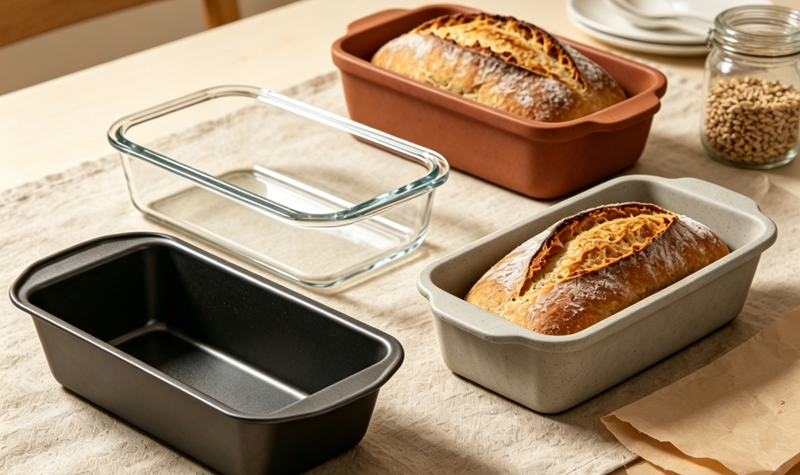
Loaf pans come in several materials. Each has its own strengths and weaknesses.
Metal
Metal is the most popular choice for a loaf pan. Most metal loaf pans are made from steel, often with a non-stick coating. Metal heats quickly and evenly, which helps create a nicely browned crust on breads and cakes.
Metal pans are lightweight and easy to handle. They won’t break if dropped, unlike glass or ceramic options. Most metal loaf pans weigh about 1 pound or less, making them easy to lift in and out of the oven.
The main downside is that non-stick coatings on metal pans will eventually degrade with use. You may need to replace a metal loaf pan after several years of regular baking.
Glass
Glass loaf pans are transparent, so you can see the browning on the bottom and sides of your bread. Glass retains heat well and provides gentle, even baking.
However, glass pans are heavier than metal ones, typically around 2 pounds. They conduct heat more slowly, so your baked goods may take 5 to 10 minutes longer to bake. You may need to lower your oven temperature by 25°F when using glass to avoid over-browning.
Glass can also break if dropped or exposed to sudden temperature changes. Baked goods may stick more easily to glass, so thorough greasing is important.
Ceramic
Ceramic loaf pans are beautiful and often come in decorative colors and patterns. They are excellent for serving because they can go directly from oven to table.
The downside is that ceramic is heavy, often over 2 pounds. It conducts heat more slowly than both glass and metal, so baking times may be longer. Ceramic pans are also more expensive, often costing over $50.
Like glass, ceramic can break if dropped, and baked goods may stick more readily than with metal pans.
Silicone
Silicone loaf pans are lightweight, flexible, and naturally non-stick. They are easy to store because you can fold them.
However, silicone does not brown baked goods as well as metal. The flexibility can make them difficult to handle, especially when full of liquid batter. Silicone also tends to retain odors and stains over time.
For most home bakers, a metal loaf pan offers the best balance of performance, durability, and value.
2. Consider the Size
Loaf pans come in different sizes, and the size you choose affects how your baked goods turn out.
Standard Size (8.5 x 4.5 inches)
This is the most common size for a loaf pan. It holds about 5 to 6 cups of batter. Pans of this size produce tall, well-proportioned loaves with nicely domed tops.
Many recipes are written for this size. If you use a larger pan, your bread may come out shorter and wider. The batter spreads thinner, which can cause it to bake faster.
Large Size (9 x 5 inches)
A 9 x 5 inch sartén holds about 7 to 8 cups of batter. This size works well for larger batches or when you want a wider loaf.
Keep in mind that recipes written for the smaller size may produce shorter, flatter loaves in a larger pan. You may need to reduce the baking time since the batter is spread thinner.
Mini Loaf Pans
Mini baking pans are smaller, typically holding 1 to 2 cups of batter. These are great for gift giving, portion control, or when you want to bake multiple varieties at once.
Most mini pans measure about 5.75 x 3 inches. They bake faster than standard pans, so check for doneness earlier.
When choosing bakeware, consider what you bake most often. A standard 8.5 x 4.5 inch pan is the most versatile choice for most home bakers.
3. Look at the Construction: Folded vs. Molded
Metal loaf pans are made in two different ways: folded or molded. The construction affects both the appearance of your baked goods and how easy the pan is to clean.
Folded Pans
Folded pans are made by folding the metal at the corners, like wrapping paper around a box. This creates sharp, right-angled edges.
The advantage of a folded loaf pan is that it produces picture-perfect loaves with crisp, professional-looking edges. If you want your banana bread or pound cake to have clean, sharp corners, a folded pan is a good choice.
The downside is that folded pans have small crevices at the corners where crumbs and residue can get trapped. They can also trap water, which makes them more prone to rusting. These pans require careful cleaning.
Molded Pans
Molded pans are made by pressing a hot, pliable sheet of metal into a loaf-shaped form. This creates pans with gently curved corners.
A molded loaf pan is much easier to clean because there are no nooks and crannies where food can hide. The rounded edges also make them less likely to scratch or chip.
The trade-off is that molded pans produce loaves with rounded edges. The baked goods still taste great, but they may look a little less polished than those made in folded pans.
Which Should You Choose?
If your priority is professional-looking loaves with crisp edges, choose a folded loaf pan. If you prefer easier cleanup and don’t mind rounded edges, a molded pan is a good choice.
4. Check the Coating
Most metal loaf pans have a non-stick coating. The type of coating affects how easily your baked goods release and how long the pan lasts.
Silicone-Based Coatings
Silicone-based non-stick coatings are common on high-quality loaf pan products. Le Creuset’s bakeware, for example, features an innovative silicone coating over heavy-gauge carbon steel. This provides excellent food release with very little or no oil.
Silicone coatings are also used on the USA Pan loaf pans, which are top-rated by America’s Test Kitchen. These coatings release baked goods easily and are fairly durable.
PTFE-Based Coatings (Teflon)
Some loaf pan products use PTFE-based non-stick coatings, commonly known by the brand name Teflon. These coatings provide good release but may degrade at very high temperatures.
Some health-conscious bakers prefer to avoid PTFE coatings. Studies have shown that Teflon coatings can degrade at high temperatures, releasing fumes. If this concerns you, look for a loaf pan with a PTFE-free coating.
Caring for Non-Stick Coatings
All non-stick coatings will eventually degrade with use. You can extend the life of your loaf pan by:
Avoiding metal utensils (use silicone, nylon, or wood instead)
Hand washing instead of using the dishwasher
Avoiding cutting directly in the pan
Not using aerosol non-stick cooking sprays, which can leave residue that builds up over time
Most manufacturers recommend hand washing their non-stick loaf pan products. Some are labeled dishwasher safe, but hand washing is gentler and will help the coating last longer.
5. Consider Dark vs. Light Pans
The color of your loaf pan affects how it absorbs heat.
Dark Pans
Dark-colored pans absorb more heat than light ones. A dark loaf pan will cause your baked goods to brown more quickly and deeply.
If you use a dark pan, you may need to lower your oven temperature by 25°F to prevent over-browning. You should also start checking for doneness a few minutes earlier than the recipe suggests.
Light Pans
Light-colored loaf pan products reflect more heat. They produce gentler browning, which can be desirable for delicate cakes or light-colored breads.
Light pans may take slightly longer to achieve the same level of browning as dark pans. You can usually follow recipe temperatures without adjustment.
Which Is Better?
Neither is inherently better. The choice depends on your preferences and what you bake most often. If you like deeply browned crusts on your breads, a dark loaf pan may suit you well. If you prefer lighter, more even browning, a light pan is a good choice.
Some bakers keep both types. They use dark pans for breads and light pans for delicate cakes.
6. Look for Thoughtful Design Features
A well-designed sartén includes features that make baking and cleaning easier.
Reinforced Rims
A sartén with a reinforced rim or rolled edges is less likely to warp over time. The rim adds structural strength to the pan. This is especially important for larger pans or pans made of thinner metal.
Handles
Heavier pans, like those made of glass or ceramic, often have handles. These make it easier to lift the pan in and out of the oven.
Metal pans typically don’t have handles. However, they are lightweight enough that handles aren’t usually necessary. Some metal loaf pan products have a slight rim that makes them easier to grip.
Corrugated Surfaces
Some bakeware has a corrugated or textured surface. This can help with airflow and may affect how the crust forms. However, in testing, the corrugated pattern didn’t significantly affect the appearance of baked goods.
When evaluating a loaf pan, look for smooth, even coating and sturdy construction. These qualities contribute to better baking results and longer pan life.
7. Balance Quality with Price
You don’t need to spend a lot of money to get a good loaf pan. America’s Test Kitchen recommends models that cost around $15 to $20.
What to Expect at Different Price Points
Under $15: You can find decent basic loaf pan options at this price. Look for heavy-gauge metal with a non-stick coating. Avoid very thin pans, as they may warp.
$15 to $30: This range includes top-rated loaf pan products from reputable brands. These pans typically have better construction, more durable coatings, and thoughtful design features.
Over $50: Premium options, often ceramic or designer brands. These may be beautiful for serving but don’t necessarily bake better than mid-priced metal pans.
Value vs. Performance
A moderately priced metal loaf pan with a good non-stick coating often performs as well as or better than expensive alternatives. Focus on material, construction, and coating rather than price alone.
Remember that all non-stick coatings eventually wear out. You may need to replace your loaf pan after several years of regular use. Buying a reasonably priced pan makes replacement less painful.
Comparison Table: Loaf Pan Materials at a Glance
| Material | Heat Conductivity | Weight | Durability | Best For |
|---|---|---|---|---|
| Metal (Carbon/Aluminized Steel) | Fast, even | Light (1 lb) | Good | Crisp crusts, quick baking |
| Glass | Slow, even | Heavy (2 lb) | Fair (breaks if dropped) | Gentle baking, monitoring browning |
| Ceramic | Slow | Very heavy (2+ lb) | Fair (breaks if dropped) | Serving, slow bakes |
| Silicone | Poor | Very light | Good | Easy release, no-bake desserts |
For most home bakers, a metal loaf pan offers the best combination of performance, durability, and value.
Common Questions About Loaf Pans
Do I need to grease a non-stick pan?
Even with a non-stick loaf pan, a light greasing can help. Use butter, shortening, or cooking spray. For chocolate recipes, use cocoa powder instead of flour to avoid white spots.
Can I use a glass pan instead of metal?
Yes, but you may need to adjust your baking time and temperature. Glass retains more heat and takes longer to heat up. Lower the temperature by 25°F and bake slightly longer.
Why does my bread stick to the pan?
The pan may not be greased enough, or the non-stick coating may be worn. Try greasing more thoroughly. If the coating is damaged, it may be time to replace your bakeware.
Can I put my loaf pan in the dishwasher?
Check the manufacturer’s instructions. Most non-stick loaf pan products should be hand washed to protect the coating. Dishwasher detergents and high heat can damage non-stick surfaces over time.
What size loaf pan is best for banana bread?
A standard 8.5 x 4.5 inch sartén works well for most banana bread recipes. This size produces a tall, nicely domed loaf.
Conclusion
Choosing the right loaf pan doesn’t have to be complicated. Focus on the material, size, and construction that match your baking needs.
The 7 tips covered in this guide are:
Understand the different materials (metal, glass, ceramic, silicone)
Consider the right size for your recipes
Look at folded vs. molded construction
Check the non-stick coating quality
Consider dark vs. light pan color
Look for thoughtful design features
Balance quality with price
A good loaf pan is an investment in your baking. With proper care, a quality pan can help you bake delicious breads, cakes, and more for many years.