Ceramic vs. Enamel vs. PTFE: Which Non-Stick Coating Will Dominate the Future of Bakeware?
Introduction: The Coating Revolution in Your Oven
For decades, the non-stick bakeware market has been dominated by one name: PTFE (commonly known as Teflon®). But the landscape is shifting. Health-conscious consumers, environmental regulations, and technological advancements are pushing ceramic and enamel coatings into the spotlight.
The global non-stick cookware coating market was valued at USD 5.4 billion in 2024 and is projected to reach USD 7.9 billion by 2032. With ceramic coatings experiencing a surge in demand and regulatory scrutiny intensifying around fluoropolymers, the question is no longer if the industry will change — but which coating will lead the way.
Let’s break down the science, the performance, and the future of each contender.
🔬 PTFE (Polytetrafluoroethylene): The Gold Standard — With a Catch
PTFE is the most mature non-stick coating technology, first commercialized in the 1950s. It remains the industry benchmark for a reason.
✅ Strengths
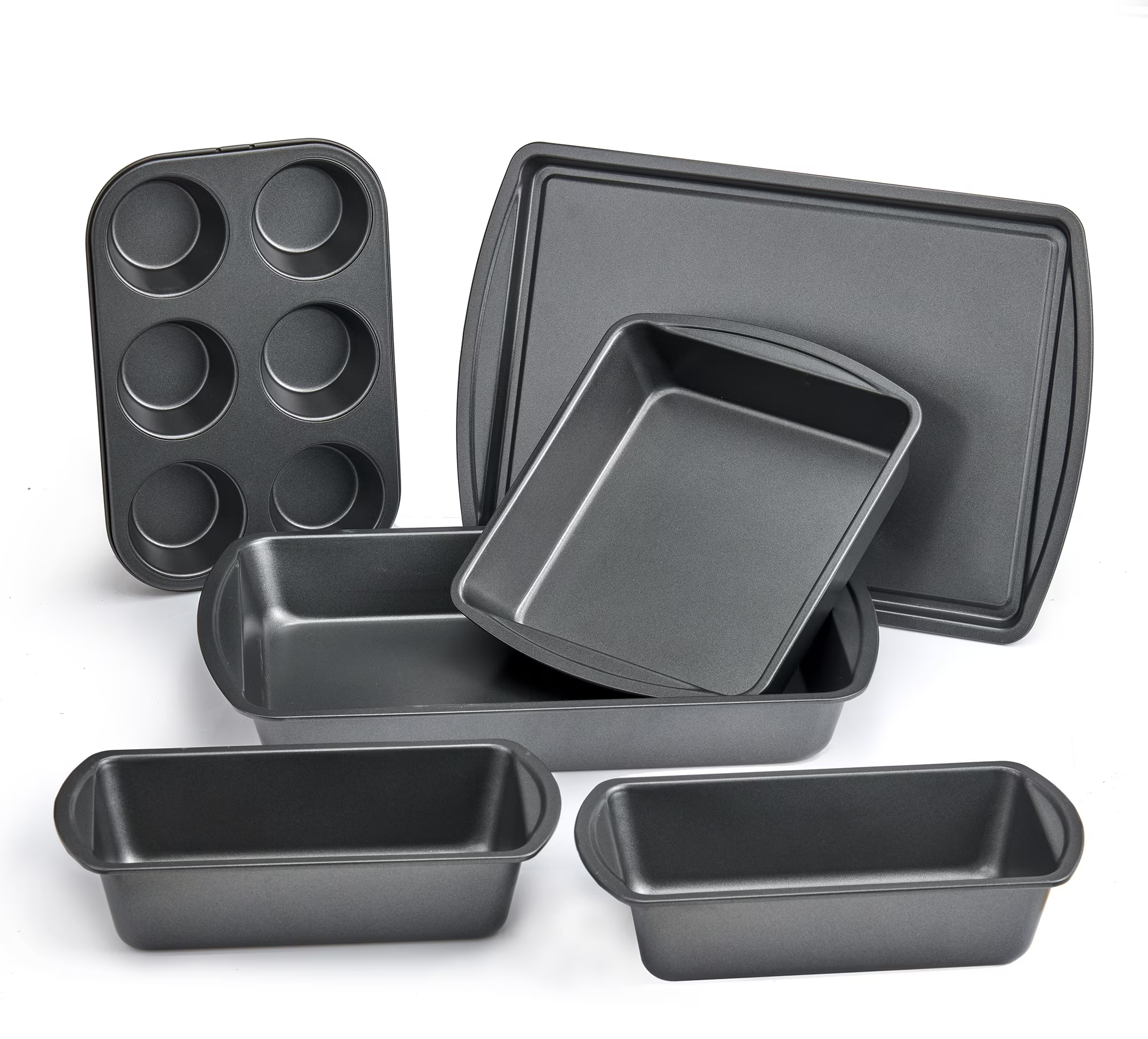
Superior Non-Stick Performance: PTFE maintains low and consistent peel force even after 90 cooking cycles, with average release forces up to three times lower than the best ceramic coatings. In some studies, the peel force required to lift food from PTFE was 7 to 14 times less than ceramic alternatives.
Exceptional Durability: PTFE outperforms ceramics in resisting severe wear from abrasive particles. Advanced reinforced PTFE coatings can withstand up to 45,000 cycles of dry abrasion and 60,000 cycles of wet abrasion testing.
Long Lifespan: With proper use, PTFE coatings can maintain their non-stick properties for 3 to 5 years.
⚠️ Weaknesses
Heat Sensitivity: PTFE coatings begin to degrade above 260°C (500°F) and can release harmful gases if overheated beyond 360°C.
Health and Environmental Concerns: While PFOA (a known health concern) was phased out by 2012, PTFE itself is a fluoropolymer. When overheated, it can break down into “forever chemicals” (PFAS). Regulatory bodies are increasingly scrutinizing these materials.
Scratch Sensitivity: PTFE coatings are easily damaged by metal utensils and abrasive cleaning tools.
📍 Best For
High-frequency baking, commercial kitchens, and users who prioritize maximum non-stick performance above all else.
🏺 Ceramic Coating: The “Green” Challenger
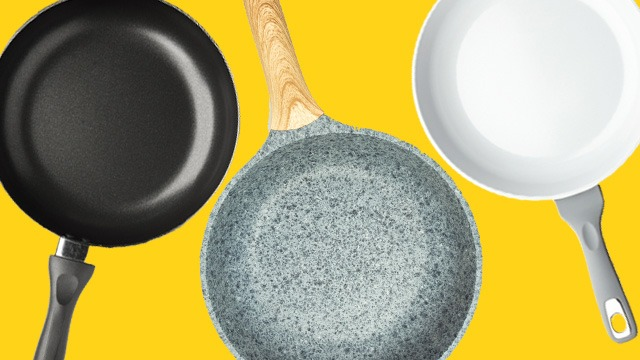
Ceramic coatings are made primarily from silica (sand) and other inorganic materials through a sol-gel process. They’ve gained massive popularity as a “natural” and “non-toxic” alternative.
✅ Strengths
PFAS-Free and Non-Toxic: Ceramic coatings contain no PTFE, no PFOA, and no PFAS. This is their single biggest selling point in today’s health-conscious market.
Superior Heat Resistance: Ceramic coatings can withstand temperatures above 400°C (752°F) and some even up to 600°C. They are far more forgiving than PTFE in high-heat baking applications.
Scratch Resistance: With a Mohs hardness of 6-7, ceramic coatings are significantly harder than PTFE and more resistant to scratches from utensils.
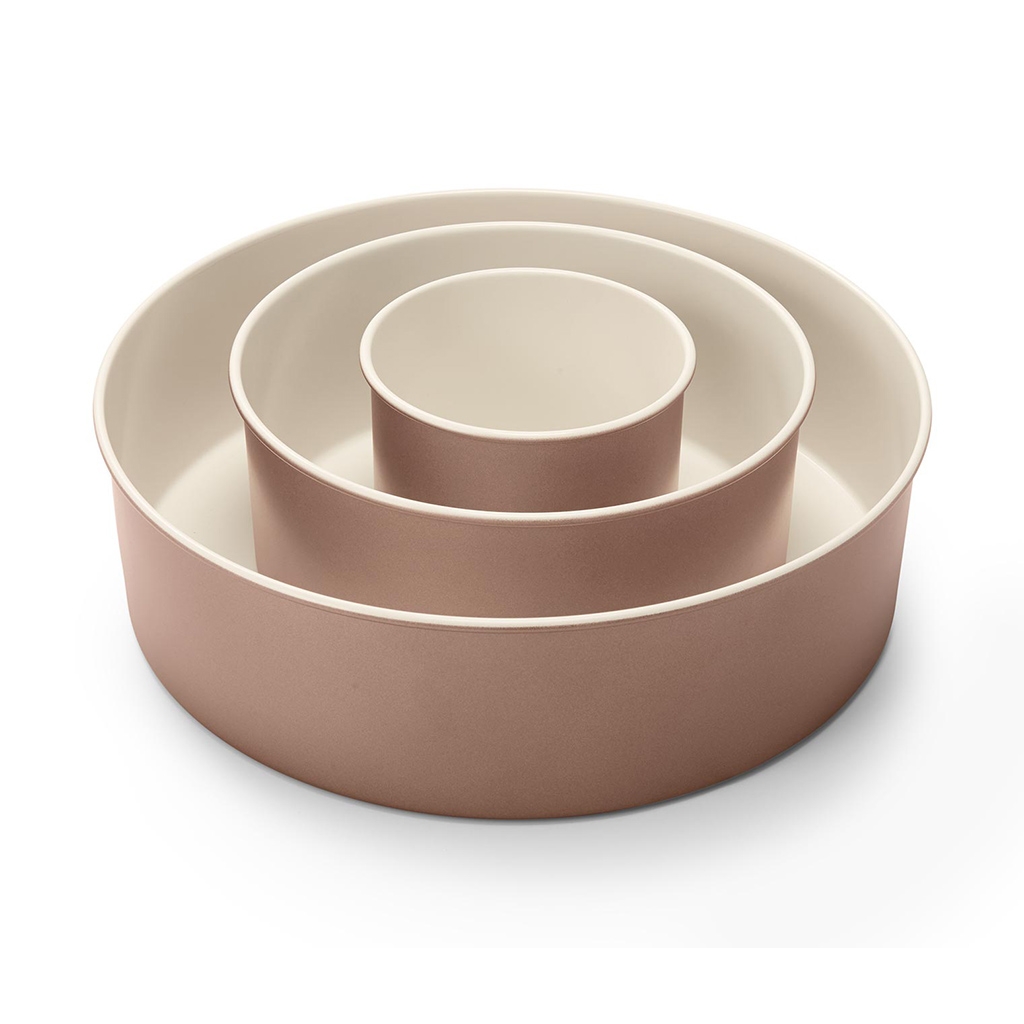
Aesthetic Appeal: Ceramic coatings offer a clean, white or light-colored surface that many consumers find visually appealing.
⚠️ Weaknesses
Inferior Non-Stick Performance: While improving, ceramic coatings still cannot match PTFE’s release properties. After 30-60 cooking cycles, peel stress ranges from 4-14 kPa — significantly higher than PTFE.
Shorter Lifespan: Ceramic coatings typically last only 1-2 years under regular use before their non-stick properties degrade. They are inherently brittle and prone to developing microscopic cracks during everyday use.
Fragility: Despite their hardness, ceramic coatings can chip or crack under impact.
📍 Best For
Health-conscious home bakers, moderate-frequency use (3-4 times per week), and applications where non-toxicity outweighs ultimate performance.
🎨 Enamel Coating: The Timeless Classic
Enamel (also known as vitreous enamel or porcelain enamel) is a glass-like coating fused to a metal substrate at high temperatures (often 850°C). It’s the oldest of the three technologies.
✅ Strengths
Exceptional Longevity: Enamel coatings can last 10 years or more without significant degradation, provided they are not chipped.
Chemical Inertness: Enamel is non-reactive with acidic foods and provides a formidable barrier between the metal base and your food.
Heat Resistance: Enamel coatings are highly heat-resistant and can withstand high oven temperatures without degradation.
Aesthetic and Versatile: Enamel comes in a wide range of colors and finishes, and can be used both for baking and for serving.
⚠️ Weaknesses
Chipping and Cracking: Enamel is glass — it chips and cracks under impact. Once chipped, the exposed metal can rust.
Thermal Shock Sensitivity: Rapid temperature changes (e.g., moving from a hot oven to a cold counter) can cause the enamel to craze or crack.
Heavier: Enamel coatings are typically applied to cast iron or heavy-gauge steel, making the bakeware significantly heavier.
Lower Non-Stick Performance: Enamel is naturally somewhat non-stick, but not as effective as PTFE or even ceramic.
📍 Best For
Long-term investment bakeware, acidic foods (tomato-based dishes, citrus), and users who value durability and aesthetics over ultimate non-stick performance.
📊 Head-to-Head Comparison
| Característica | PTFE | Ceramic | Enamel |
|---|---|---|---|
| Non-stick performance | ⭐⭐⭐⭐⭐ (Best) | ⭐⭐⭐ (Moderate) | ⭐⭐ (Basic) |
| Heat resistance | ⭐⭐ (260°C max) | ⭐⭐⭐⭐⭐ (400°C+) | ⭐⭐⭐⭐ (High) |
| Durability/lifespan | ⭐⭐⭐⭐ (3-5 years) | ⭐⭐ (1-2 years) | ⭐⭐⭐⭐⭐ (10+ years) |
| Scratch resistance | ⭐⭐ (Soft) | ⭐⭐⭐⭐ (Hard) | ⭐⭐⭐ (Brittle) |
| Impact resistance | ⭐⭐⭐⭐ (Flexible) | ⭐⭐ (Brittle) | ⭐⭐ (Chipping risk) |
| PFAS/PFOA-free | ❌ (Contains PTFE) | ✅ | ✅ |
| Aesthetic options | ⭐⭐ (Limited) | ⭐⭐⭐⭐ (Clean look) | ⭐⭐⭐⭐⭐ (Many colors) |
| Cost (consumer) | 💰💰 (Affordable) | 💰💰💰 (Mid-range) | 💰💰💰💰 (Premium) |
🔮 The Future: Who Will Win?
📈 Market Trends
The data tells a compelling story:
-
Ceramic coatings are experiencing a surge in demand, driven by health-conscious consumers. 68% of new cookware purchasers cite reduced chemical exposure as a decisive factor.
-
By early 2026, over $650 million in capacity expansions are concentrated in ceramic and PFAS-free coating systems.
-
The global ceramic non-stick coatings market recorded roughly $1.2 billion in revenue in 2023.
-
Manufacturers are shifting from traditional PTFE-based coatings to advanced ceramic, titanium, and nano-textured coatings.
⚖️ The Verdict
PTFE will remain the performance king for the foreseeable future. No competing technology matches its non-stick properties or durability under heavy use. For commercial kitchens and high-frequency home bakers, PTFE is still the logical choice.
Ceramic is the fastest-growing contender. Its PFAS-free positioning, excellent heat resistance, and improving formulations make it the coating of choice for the health-conscious consumer. A 2025 study found that certain ceramic coatings (PPG ECM and Akcoat CC) provided a better balance between non-stick and abrasion resistance than PTFE. With continued R&D, ceramic could close the performance gap.
Enamel is the durability champion. It’s the coating you buy once and keep for a decade or more. While it lacks the slickness of PTFE or ceramic, its longevity, chemical inertness, and timeless aesthetic ensure it will always have a place — particularly in premium and heirloom-quality bakeware.
💡 Final Thought: No Single Winner — Only Trade-offs
The future of bakeware coatings isn’t about one technology “winning.” It’s about choosing the right tool for the right job:
-
Need ultimate non-stick performance? Choose PTFE.
-
Prioritize health and environmental safety? Choose ceramic.
-
Want heirloom-quality durability? Choose enamel.
The coatings industry is evolving rapidly. Sol-gel ceramic coatings with chromium/silicon oxides and carbides have shown promise as eco-friendly alternatives. Advanced PTFE formulations with ceramic reinforcements now offer service lives more than five times longer than monolithic PTFE. And enamel continues to improve its formulations for better adhesion and resistance.
The “winner” depends entirely on your priorities — and that’s exactly how it should be.
Which coating do you prefer in your bakeware? Drop your thoughts in the comments below! 👇
#Bakeware, #NonStickCoating, #PTFE, #CeramicCoating, #EnamelCoating, #BakewareManufacturing, #Kitchenware, #Cookware, #FoodSafety, #PFASFree, #SustainableLiving, #ProductDesign, #MaterialsScience, #FoodServiceEquipment, #CommercialBaking, #ManufacturingExcellence, #Engineering, #QualityControl, #HomeBaking, #KitchenInnovation